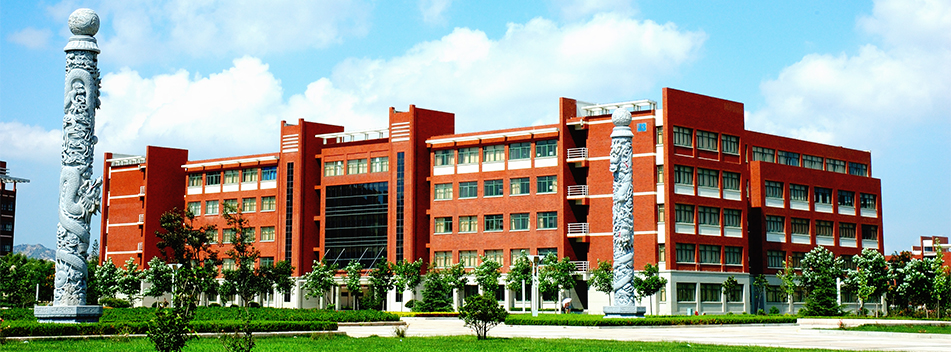
Founded in 1951, Shandong University of Science and Technology (SDUST) is a key university in Shandong Province known for its distinctive training of application-oriented talent with a solid academic foundation. It has outstanding strengths in engineering and distinctive industry features, and offers multidisciplinary education across engineering, science, management, literature, law, economics, arts, and education, with these disciplines interconnected and developing in a coordinated way. It is also a high-level university in Shandong Province’s “Striving for First-Class” construction program.
The University has three campuses in Qingdao, Tai’an, and Jinan, covering more than 233 hectares with a gross floor area of 1.57 million square meters. Its fixed assets are valued at RMB 5.086 billion, and its teaching and research instruments and equipment are valued at RMB 1.303 billion. It has 34 teaching units and 5 research units, 10 postdoctoral research stations, 11 first-level disciplines authorized to confer doctoral degrees, one professional doctoral degree category, 33 first-level disciplines authorized to confer master’s degrees, 23 professional master’s degree categories, and 73 undergraduate majors.
It has one national key discipline (under cultivation), two potential disciplines under Shandong Province’s “811” First-Class Discipline Construction Program, four high-level disciplines of Shandong Province, five first-class disciplines of Shandong Province, and 21 provincial and municipal key disciplines. Eight disciplines rank in the top 1% of the ESI global rankings, and three of them rank in the top 0.1%. It also has one National Key Laboratory, two State-Local Joint Engineering Research Centers, one National Engineering Laboratory, and 130 provincial/ministerial and Qingdao municipal laboratories (bases) and engineering (technology) research centers.
SDUST has more than 28,700 full-time undergraduates, more than 11,600 graduate students, and more than 24,900 adult students pursuing bachelor’s and associate degrees. It has more than 3,300 faculty and staff, including 618 with senior professional titles and 1,048 with associate senior professional titles. There are three academicians of the Chinese Academy of Sciences and/or the Chinese Academy of Engineering; 57 national-level talent recipients, including Changjiang Scholars, National Science Fund for Distinguished Young Scholars awardees, leading talents under the National Ten Thousand Talents Program, and candidates under the National Hundred, Thousand and Ten Thousand Talent Project; and 44 recipients of special government allowances from the State Council. It also has two leading talents of the Taishan Scholar Advantageous and Characteristic Discipline Talent Teams; 92 Taishan Scholars, including Climbing Program experts, distinguished experts, and young experts; and 23 young and middle-aged experts with outstanding contributions to Shandong Province. There are three National Model Teachers, six National Outstanding Teachers, two National Teaching Masters, and 26 Shandong Provincial Teaching Masters. It has one national teaching team, one national-level curriculum-based ideological and political education teaching team, two national Huang Danian-style teacher teams, and 15 provincial-level grassroots teaching organizations (teaching teams). It also has two Innovation Teams of the Ministry of Education, 64 innovation teams under Shandong Province’s Youth Innovation Science and Technology Program for Higher Education Institutions, and 24 innovation teams under the Talent Introduction and Cultivation Program.
It has 26 national first-class undergraduate major construction points; eight specialty and comprehensive reform pilot majors in total; and 19 majors accredited through engineering education certification. It also has 43 national first-class undergraduate courses; one demonstration course in curriculum-based ideological and political education; 10 excellent open video courses, resource-sharing courses, and excellent courses in total; six teaching achievement awards; five centers in total, including experimental teaching demonstration centers, virtual simulation experimental teaching centers, and engineering practice education centers; one pilot zone for innovation in talent training models; and one off-campus practical education base for university students.
At the provincial level, it has 12 provincial demonstrative and distinctive colleges, 15 provincial first-class undergraduate major construction points, 18 brand and specialty majors, nine high-level application-oriented major groups approved for construction, five education-industry matching projects serving the conversion of old and new growth drivers, 110 first-class undergraduate courses, 44 demonstration courses in curriculum-based ideological and political education, 58 excellent courses, 141 teaching achievement awards, one demonstration center for teaching and research in curriculum-based ideological and political education, six demonstrative internship (training) bases, nine experimental teaching demonstration centers, two pilot zones for innovation in talent training models, and one public training base for industries (special programs) serving the conversion of old and new growth drivers.
Since the beginning of the 14th Five-Year Plan period, the University has undertaken 717 national research projects and 1,188 provincial and ministerial research projects. It has received 236 research awards at or above the provincial and ministerial level, including six National Science and Technology Awards and 47 Shandong Provincial Science and Technology Awards. A total of 3,490 national invention patents have been granted. Journal of Shandong University of Science and Technology (Natural Science Edition) is a national Chinese core journal and a Chinese science and technology core journal. The University Science and Technology Park has been jointly recognized by the Ministry of Science and Technology and the Ministry of Education as a “National University Science and Technology Park” and a “Science and Technology Entrepreneurship Internship Base for University Students.” The University is among the first batch of bases designated by the Ministry of Education for the transformation and transfer of scientific and technological achievements in higher education institutions.
The University has signed cooperation agreements with more than 130 universities and educational and research institutions in 28 countries and regions. It hosts two National “Discipline Innovation and Talent Introduction Bases for Higher Education Institutions” (the “111 Bases”). More than 150 foreign experts and teachers work at the University each year. It has two non-independent Sino-foreign cooperative education institutions and three Sino-foreign cooperative education programs approved by the Ministry of Education, with about 2,700 students enrolled. It has about 1,500 international students.
Looking ahead, the University’s faculty and students will uphold the motto “Seek Truth and Innovation,” the ethos “Unity, Diligence, Truth-Seeking, and Innovation,” the SDUST spirit of “Perseverance and Self-Improvement,” and the SDUST tradition of “Love for the University, Dedication, and Practical Work.” They will strive in the new era, seize new opportunities, and achieve new breakthroughs, working to build the University into an engineering-led, distinctive, high-level applied research university.